Three by Three
Pew Research has published their most recent data on the political typology of the United States, which divides the nation into nine broad ideological categories, namely:
- No Apologies Right
- Faith First Conservatives
- Unconventional Right
- Pragmatic and Polite Right
- Tuned-Out Middle
- Order and Opportunity Left
- Left-Out Left
- Loyal Liberals
- Leftward Progressives
I find it somewhat convenient that there are four right-leaning types, four left-leaning and one rather disengaged one in the center, but I suppose that it makes things more accessible to people that way, given the degree to which many Americans understand politics to only have the single Right-Left dimension.
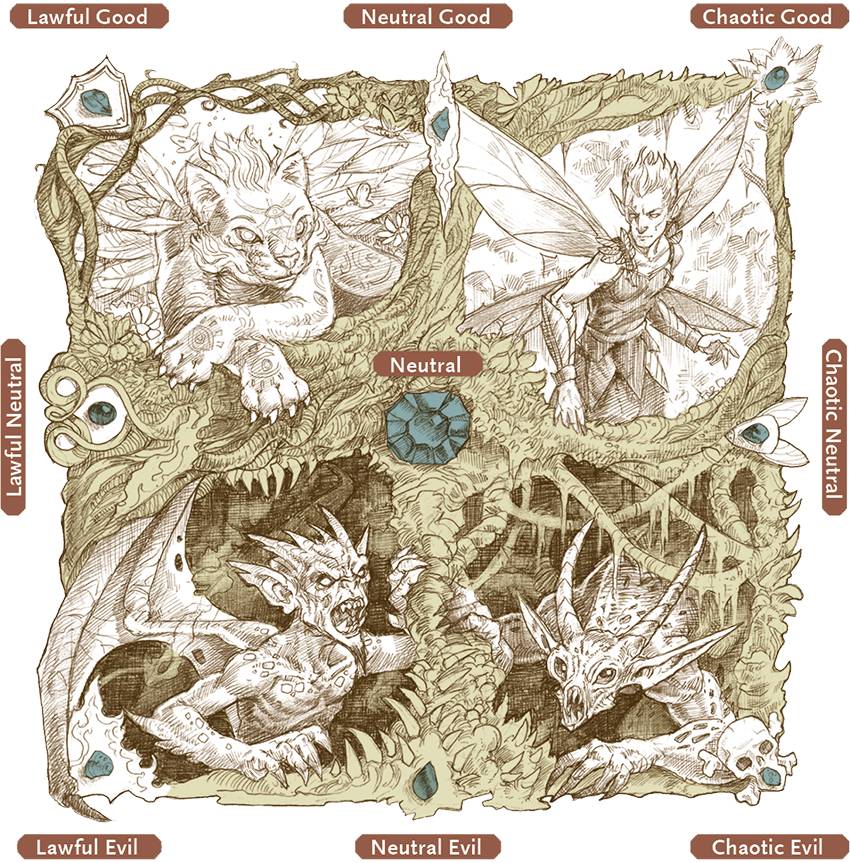
But, and perhaps this is simply more proof that I'm a nerd, the first thing that came to mind was a Dungeons and Dragons alignment chart, which also has nine types, defined in a grid having Good-Neutral-Evil on one axis and Lawful-Neutral-Chaotic on the other. Dropping Pew's "Tuned-Out Middle" into the "True Neutral" center box of D&D alignments is simple enough, but it become fairly complicated from there... Which type would map to Neutral Evil? Or Chaotic Good?
One could make a political quiz out of that itself... Give people the descriptions of the nine different Types, have them place them on an alignment chart and then see what their choices say about them, and their Type. Given that there are nine Types and nine alignments, I suspect that most people would seek to create a 1:1 correlation, but there's no reason why two or more Types couldn't share a single alignment. For people like me, who don't really believe that real world people ever genuinely qualify as Evil, they'd have to.
But I'm in the minority, I think. I'd be willing to bet that many Left-leaning Americans would have little difficulty filling the three Evil boxes on the alignment chart with the Right-leaning types from the Pew survey and vice-versa. And that there's useful (if perhaps depressing) information in that. Because part of the nature of high levels of partisanship, especially negative affective partisanship, is the view that people on the other side of things are the enemy. And part of the rationale that drives in-group versus out-group animosity is often the idea that the out-group is willfully, deliberately, perverse.
If, for example, a person who identifies with the Faith First Conservatives places themselves as Lawful Good, and slots the Left-Out Left into Chaotic Evil, that tells one a lot about how they view both groups. Them placing the Pragmatic and Polite Right into the Chaotic Evil box says something different, but just as enlightening, especially in a political environment where "having the right enemies" can be an important marker of group identity.




No comments:
Post a Comment